
Ultimate guide to discover the wonders of the scottish capital
Edinburgh is one of Europe’s most fascinating cities. Its skyline, dominated by castles, Gothic spires, and volcanic hills, has remained recognizable for centuries. Few capitals retain such a strong personality and such an evident relationship between their geography, history, and architecture.
The city stretches across ancient volcanic formations that have shaped its development since the Middle Ages. Perched atop one of them sits Edinburgh Castle, visible from numerous points across the Scottish capital. From there, the Royal Mile—the historical spine of the Old Town—descends until it reaches the Palace of Holyroodhouse. On either side lie narrow alleys, hidden courtyards, centuries-old cemeteries, secluded gardens, and some of the most significant buildings in Scotland’s history.”
However, the experience of visiting Edinburgh goes far beyond simply checking off a list of monuments. Much of its charm lies in understanding how the city was formed, why it has such a unique structure, and how centuries of history have shaped each of its neighborhoods.
This guide has been designed to help you discover the city in a practical and organized way, whether you have just a single day or a full week to explore the Scottish capital. In addition to the must-see highlights, you will find recommendations for planning your itinerary, the best viewpoints, lesser-known spots worth visiting, and tips to help you make the most of your time.
Unlike many guides focused solely on listing tourist attractions, the goal here is to offer a more complete vision of the city. Some places are essential to understanding Scottish history. Others stand out for their views, atmosphere, or architectural value. And there are also hidden corners that reveal a different side of Edinburgh, far from the usual tourist trails.

Useful Information
| Information | Answer |
|---|---|
| Ideal time in Edinburgh | 3 days |
| Recommended minimum | 2 days |
| Best viewpoint | Arthur’s Seat |
| Best view without effort | Calton Hill |
| Must-see monument | Edinburgh Castle |
| Best free activity | Arthur’s Seat |
| Best charming neighborhood | Dean Village |
| Best time to travel | May, June and September |
If it is your first time in Edinburgh
If you only have one or two days to visit the city, focus on Edinburgh Castle, the Royal Mile, Victoria Street, Arthur’s Seat, Calton Hill, Dean Village, and Greyfriars Kirkyard. These places gather much of the history, architecture, landscapes, and personality that have made the Scottish capital one of Europe’s most fascinating city destinations.
Many travelers come to Edinburgh drawn by the castle or photos of the Royal Mile, only to discover that the city’s true charm lies in its mix of historic monuments, characterful neighborhoods, spectacular viewpoints, and little stories that unfold as you explore on foot.
That is why, although this guide includes more than twenty recommended spots, the seven listed above offer an excellent first taste of the Scottish capital.
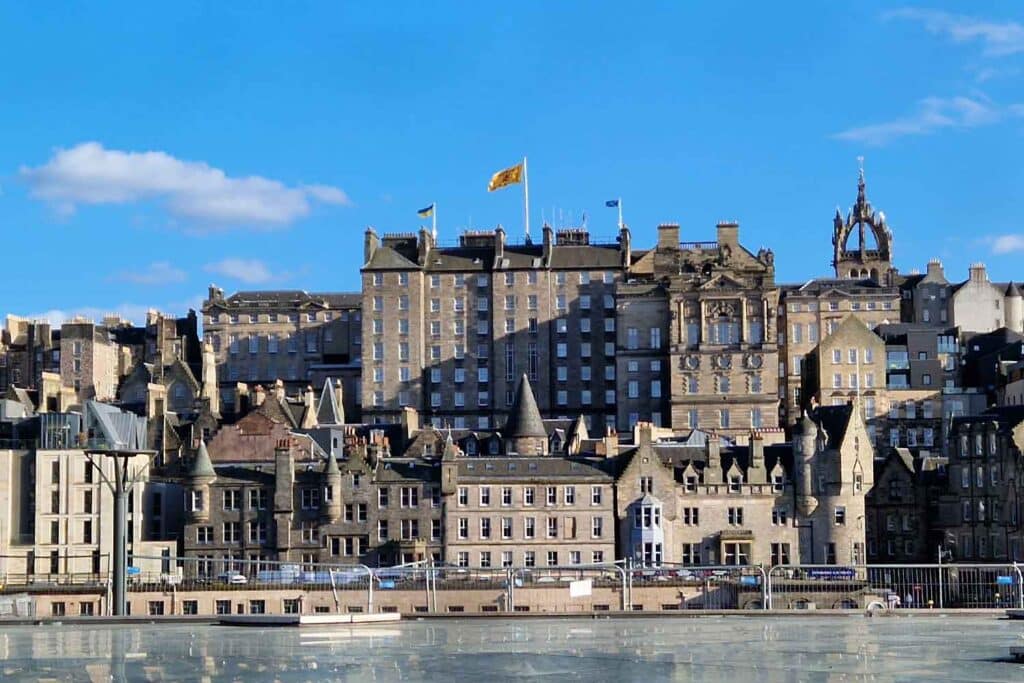
Edinburgh’s must-see attractions at a glance
| Location | Recommended time | Must-see | Ticket required |
|---|---|---|---|
| Edinburgh Castle | 2-3 hours | ★★★★★ | Yes |
| Royal Mile | 1-2 hours | ★★★★★ | No |
| Victoria Street | 30 min | ★★★★★ | No |
| St Giles’ Cathedral | 30 min | ★★★★☆ | No |
| Holyroodhouse Palace | 2 hours | ★★★★☆ | Yes |
| Arthur’s Seat | 2-3 hours | ★★★★★ | No |
| Calton Hill | 45 min | ★★★★★ | No |
| Dean Village | 1 hour | ★★★★☆ | No |
| Greyfriars Kirkyard | 45 min | ★★★★☆ | No |
| National Museum of Scotland | 2 hours | ★★★★☆ | No |
| Stockbridge | 1 hour | ★★★★☆ | No |
| Leith | 2 hours | ★★★★☆ | No |
How to understand Edinburgh in 5 minutes
One of the best ways to enjoy Edinburgh is to understand that it did not grow evenly. Its current appearance is the result of an unusual combination of geology, history, and urban planning.
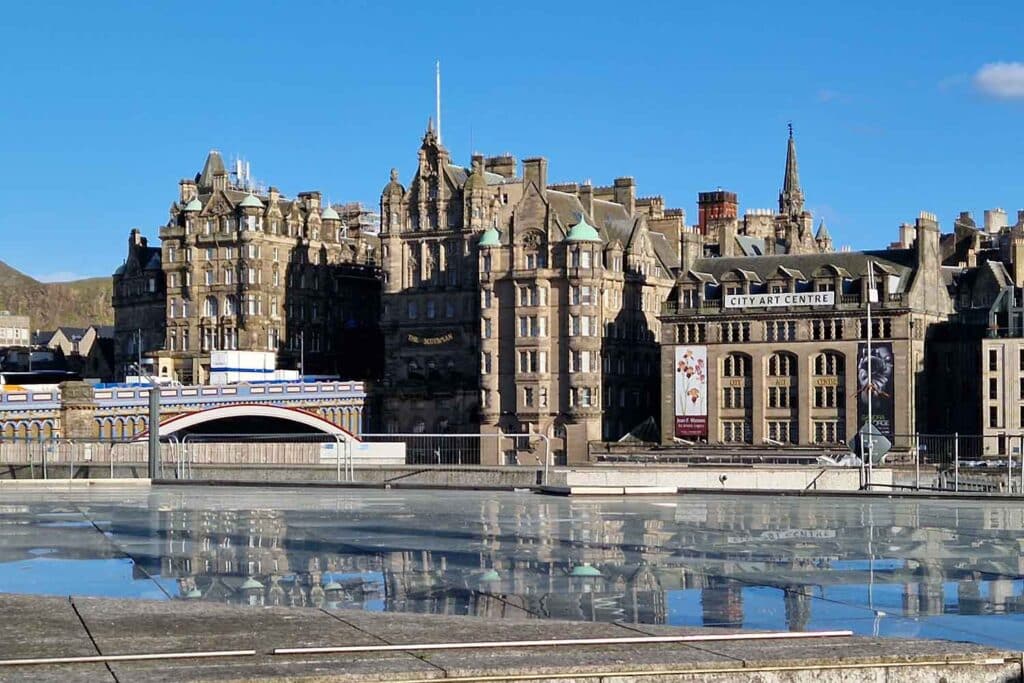
The city was born around a fortress built on a volcanic rock known as Castle Rock. Formed millions of years ago, this geological structure provided an exceptional defensive position and eventually became the core from which the Scottish capital developed.
A long rocky ridge descends from the castle, extending eastward to the Palace of Holyroodhouse. The medieval city was gradually built along this narrow natural ridge, giving rise to what is now the Royal Mile and much of what we know today as the Old Town.
For centuries, this unique topography shaped urban expansion. As the population grew, the city could not easily spread sideways due to the steep drops surrounding the rocky ridge. As a result, buildings began to grow upward. Some structures reached between ten and fourteen stories high—an extraordinary feat for 17th- and 18th-century Europe.
This phenomenon can still be appreciated in many parts of the historic center today. What looks like a four-story building from street level can turn out to be much taller when viewed from the lower level of one of the valleys surrounding the Old Town.
For centuries, virtually the entire population of Edinburgh lived packed into this small area. The outcome was a dense, maze-like, and vertical city made of narrow alleyways known as closes, inner courtyards, and a complex overlap of homes, workshops, taverns, and public buildings.
By the mid-18th century, living conditions inside the Old Town had deteriorated significantly. Homes were overcrowded, infrastructure was inadequate, and much of the wealthy elite began leaving the historic center in search of more comfortable surroundings.
The answer came in the form of one of Europe’s most ambitious urban planning projects. To the north of the Old Town, a planned expansion was built following the ideals of the Scottish Enlightenment. Thus, the New Town was born.
In contrast to the Old Town’s irregular layout, the New Town was designed with wide avenues, geometric squares, and elegant Georgian sandstone buildings. The stark contrast between these two areas remains one of Edinburgh’s most striking features.
Few cities make it so easy to see two completely different urban models separated by just a few minutes’ walk. While the Old Town retains the medieval character of its origins, the New Town reflects the optimism, rationality, and economic prosperity of the 18th century.
This side-by-side existence of two distinct cities is one of the reasons UNESCO declared the combined Old Town and New Town a World Heritage Site.
For visitors, understanding this duality is especially useful. Most of the must-see attractions on any itinerary are spread across these two historic areas.
Most of the best-known monuments are in the Old Town. The New Town, meanwhile, is home to some of the most elegant neighborhoods, perfect for a stroll.
With this overview, it becomes much easier to understand why Edinburgh looks so different from other European capitals and why exploring it leaves such a lasting impression on first-time visitors.
Table of Contents
- Things to see in Edinburgh: top must-see places
- Edinburgh Castle
- The Royal Mile
- Victoria Street, Grassmarket, and The Vennel
- St Giles’ Cathedral
- Palace of Holyroodhouse
- Arthur’s Seat
- Calton Hill
- Dean Village
- Greyfriars Kirkyard
- National Museum of Scotland
- What to see in Edinburgh according to the days you have available
- Lesser-known places that are worth a visit
- Free things to see in Edinburgh
- The best viewpoints in Edinburgh
- Mistakes many tourists make in Edinburgh
- Things to see in Edinburgh on a rainy day
- Frequently asked questions
- Must-do day trips from Edinburgh
- Our 5 favorite spots in Edinburgh
- Conclusion
Things to see in Edinburgh: top must-see places
If you had to choose a single spot to understand Edinburgh’s history, that place would be Edinburgh Castle.
Edinburgh Castle: where the city’s history began

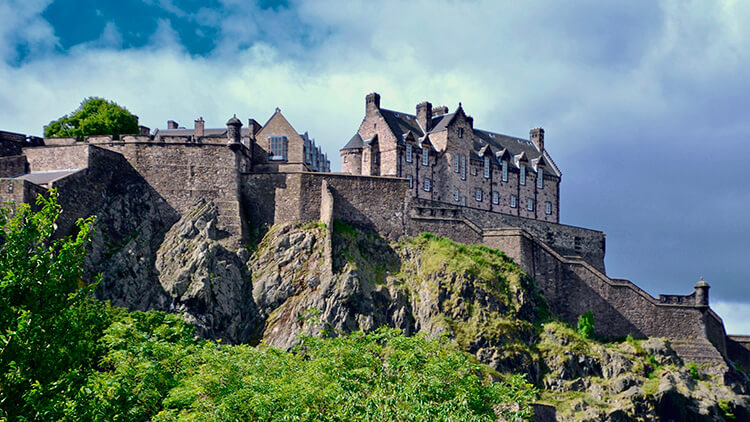
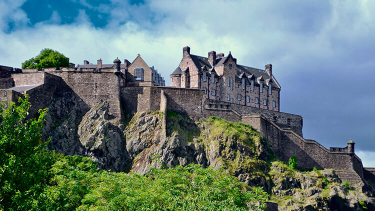
Visible from practically anywhere in the historic center, this fortress dominates the city from high atop Castle Rock, an impressive volcanic formation that has served as a defensive position for over a thousand years. Its location is no accident. Long before the Scottish capital existed as we know it today, this rock was already one of the region’s most important strategic strongholds.
Over the centuries, the castle has served as a military fortress, royal residence, prison, arsenal, and national symbol. Few buildings in Scotland pack so much history within their walls.
The castle’s importance goes far beyond its monumental presence. From here, you can understand how Edinburgh was born and why the city grew along the narrow rocky ridge that later became the Royal Mile. In fact, much of the urban landscape we admire today exists precisely because of this fortification.
During your visit, you will be able to explore various historic spaces, each belonging to a different era. Among the highlights are the Honours of Scotland (the Crown Jewels), the Great Hall, St Margaret’s Chapel—considered the oldest building in Edinburgh—and the National War Museum.
Another favorite moment for visitors is taking in the panoramic views over the city. From the ramparts, you get some of the best vistas of the Old Town, the New Town, and the Firth of Forth.
If you wish to visit the castle with an English-speaking guide and admission included, the Edinburgh Castle Tour is one of the most convenient ways to experience the monument. Additionally, it can usually be booked with an offer that makes it a very appealing alternative compared to purchasing services separately.
Is it worth going inside?
For a first visit to Edinburgh, the answer is yes.
Few places in Scotland help you understand the country’s historical evolution as deeply. Plus, the combination of architecture, heritage, views, and historical significance makes it one of the top attractions in all of Scotland.
Even people who don’t usually visit castles end up realizing why this one has become the ultimate symbol of the Scottish capital.
The Royal Mile: the spine of the Old Town
If Edinburgh Castle represents the origin of the city, the Royal Mile is its true spine.
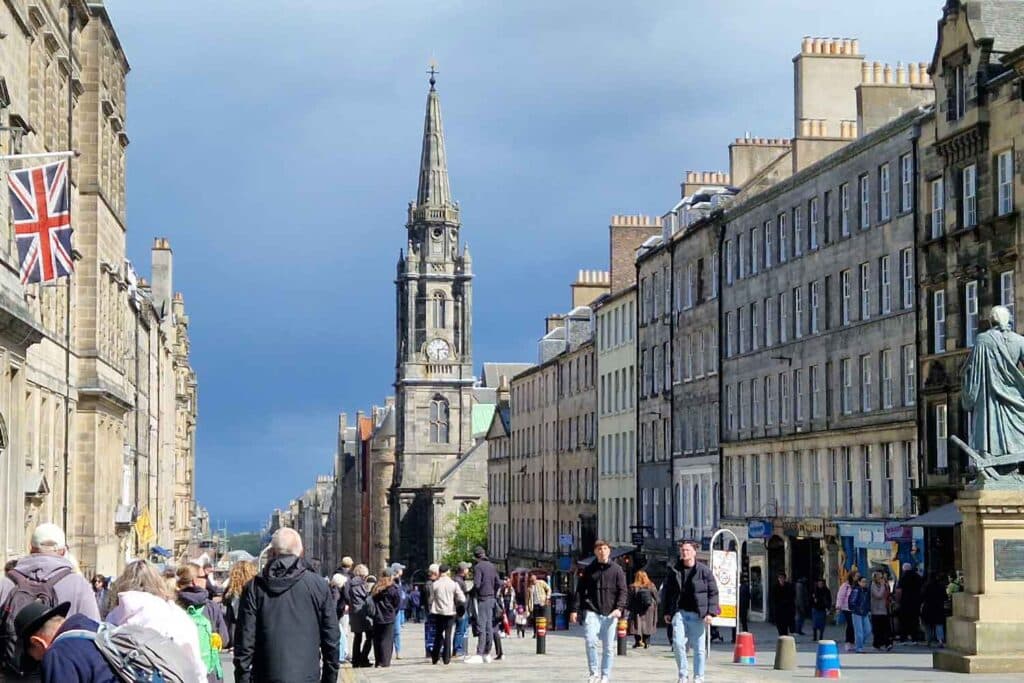
This historic thoroughfare connects the castle with the Palace of Holyroodhouse, cutting through the heart of the Old Town for just over a Scots mile—slightly longer than a traditional English mile. For centuries, it has been the main hub of Edinburgh’s political, commercial, and social life.
Walking the Royal Mile is an absolute must-do for any visitor. On both sides, you’ll find historic buildings, old medieval tenements, small squares, churches, museums, traditional shops, and dozens of narrow alleyways known as closes.
Many travelers walk the street from end to end without stopping much. However, part of the magic of the Royal Mile lies in occasionally stepping off the main path to explore these historic passages.
Some of the best-known are Advocate’s Close, Lady Stair’s Close, and Dunbar’s Close, though virtually every few meters reveals a hidden spot with centuries of history behind it.
The Royal Mile also showcases one of Edinburgh’s most unique features: its vertical growth. At certain points, it’s hard to imagine that behind some facades lived thousands of people spread across buildings that reached astonishing heights for their time.
Along the route, you’ll encounter several of the city’s most important landmarks, including St Giles’ Cathedral, the Scottish Parliament, John Knox House, and numerous historic structures that tell the story of the Scottish capital’s evolution.
If it’s your first time in the city, a fantastic way to get your bearings and better understand Edinburgh’s history is to take the Edinburgh Free Tour during the first hours of your stay. Many of the places featured in this guide are part of the tour and become far more fascinating when understood in their historical context.
How much time to spend on the Royal Mile
While you could walk it in just twenty minutes, it’s worth setting aside at least one to two hours to explore it at a leisurely pace.
The difference between simply walking down the street and discovering its closes, courtyards, and historic buildings is huge.
It tends to be quieter in the morning. In the afternoon, and especially during summer, the crowds increase significantly.
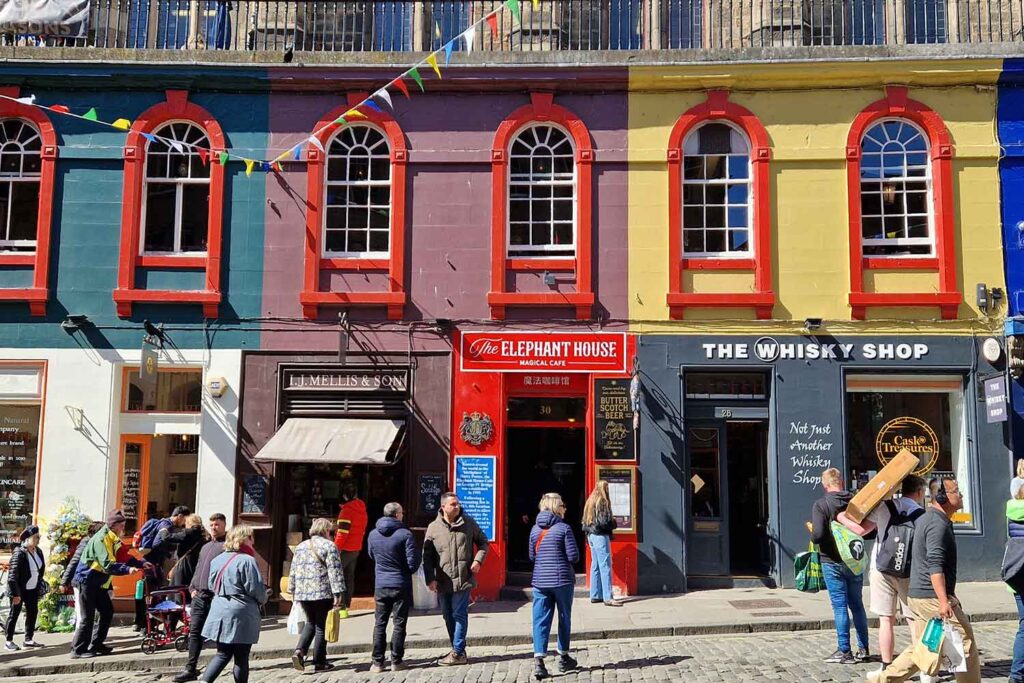
Victoria Street, Grassmarket, and The Vennel: the most photogenic Edinburgh
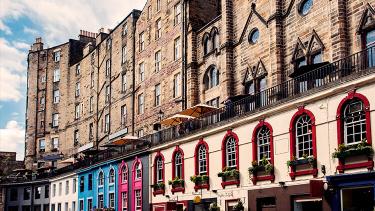
If there’s one image that can compete with the castle for the title of Edinburgh’s most iconic postcard, it’s probably Victoria Street.
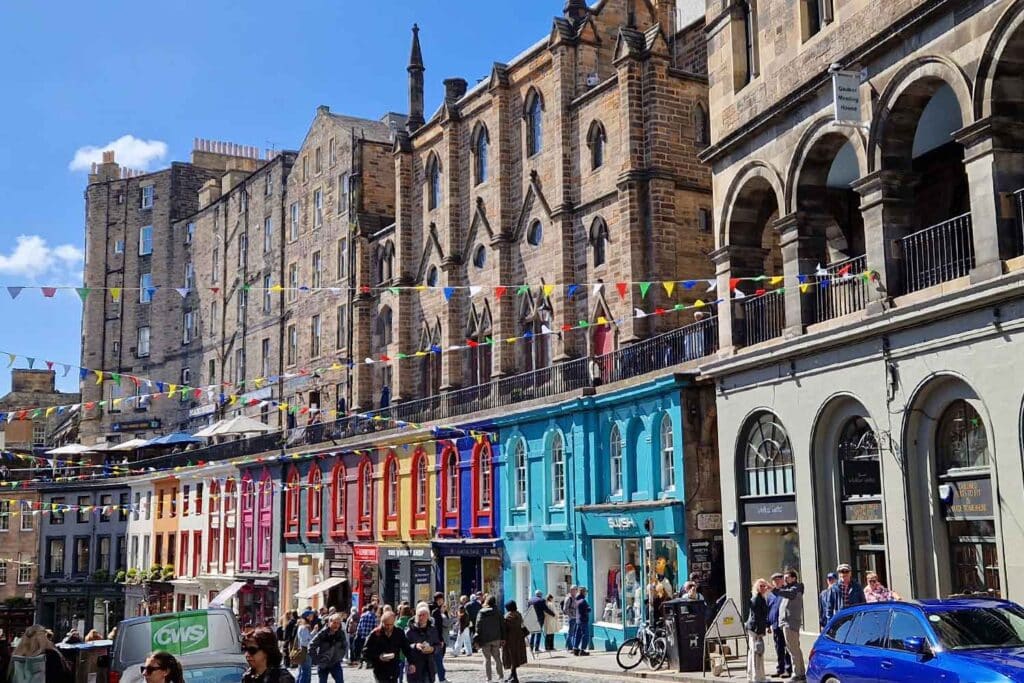
This curved street, built in the 19th century to connect the Old Town with the Grassmarket, has become one of the most photographed spots in all of Scotland.
Its colorful shopfronts, traditional displays, and sweeping curve create a perspective instantly recognizable even to those who have never visited the city.
It is frequently linked to Harry Potter due to its visual look and the striking similarities many travelers see to Diagon Alley. Although there is no official confirmation that it served as direct inspiration, it remains a favorite spot for fans of the series.
Grassmarket: centuries of history in the castle’s shadow
At the bottom of Victoria Street lies Grassmarket, a broad historic square situated right beneath Edinburgh Castle.
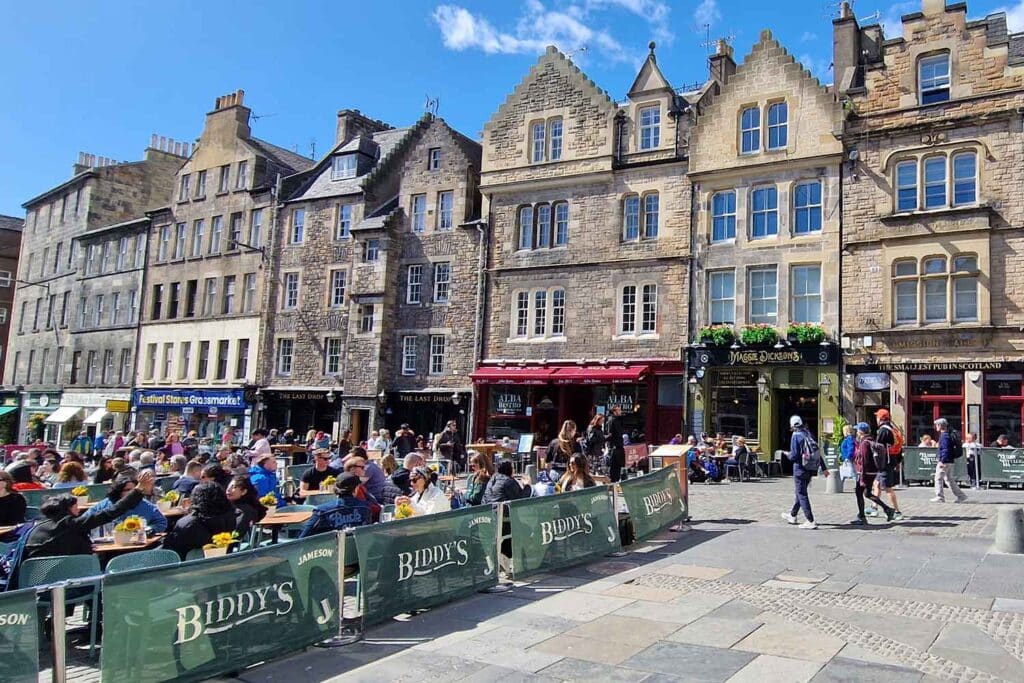
Today it is one of the liveliest areas in the city, but for centuries it was a marketplace, gathering site, and the scene of public executions.
From here, you get some of the finest angles of the castle towering over the volcanic crag that dominates the city.
It’s a great place to stop for a few minutes, soak in the atmosphere, and appreciate the striking geography upon which Edinburgh was built.
St Giles’ Cathedral: the spiritual heart of Scotland
Located right in the middle of the Royal Mile, St Giles’ Cathedral is one of the most historically significant buildings in Scotland.

Though technically it hasn’t always held official cathedral status, its religious, political, and historical weight is enormous. For centuries, it served as a stage for major moments in Scottish public life and is tightly tied to the Protestant Reformation and John Knox, one of the country’s most influential historical figures.
Its distinctive stone crown spire, visible from all over the Old Town, is one of the defining features of Edinburgh’s skyline.
The interior surprises visitors with its elegance and light. Unlike many major European churches, clean lines and a serene atmosphere prevail here, inviting you to wander through without rushing.
A key highlight inside is the Thistle Chapel, home to the Order of the Thistle—Scotland’s highest order of chivalry. Its intricate wood carvings are among the finest examples of craftsmanship in the entire city.
St Giles’ location makes it nearly impossible to miss on any walk through the historic center, so it’s well worth spending a few minutes stepping inside.
Is it worth going inside?
Yes, especially because it connects to Scottish history far more deeply than its exterior might suggest.
Plus, a visit is usually relatively brief and fits seamlessly into any walk along the Royal Mile.
Palace of Holyroodhouse: the royal residence in Scotland
At the eastern end of the Royal Mile sits the Palace of Holyroodhouse, the official Scottish residence of the British monarch.
While the castle highlights the military and defensive side of the city’s history, Holyroodhouse showcases its courtly and political side.
The present building began taking shape in the 16th century and has witnessed some of the most dramatic chapters in Scottish history. Most famous are the events surrounding Mary, Queen of Scots, one of European royalty’s most fascinating and controversial figures.
A tour takes you through State Apartments, historic chambers, and Mary’s personal rooms. You can also wander through the romantic ruins of Holyrood Abbey right next to the palace.
One of Holyroodhouse’s most unique aspects is its setting. Sitting right at the foot of Arthur’s Seat and Holyrood Park, it offers a rare, striking contrast between grand architecture and raw nature.
Few European royal residences enjoy such a dramatic backdrop.
Is it worth visiting?
It depends on what you want out of your trip.
If you love royal history, political drama, and events that shaped Scotland, it comes highly recommended.
On the other hand, visitors short on time usually prioritize Edinburgh Castle over Holyroodhouse.
Still, for a stay of three days or more, it makes for one of the city’s top cultural visits.
Practical tip
Many visitors walk down the Royal Mile from the castle to Holyroodhouse in a single day. It’s one of the most logical routes to grasp Edinburgh’s historical layout, as it connects the two anchors that drove the city’s growth for centuries.
Arthur’s Seat: the best view in Edinburgh
If you had to pick just one free activity in Edinburgh, walking up Arthur’s Seat should probably be it.
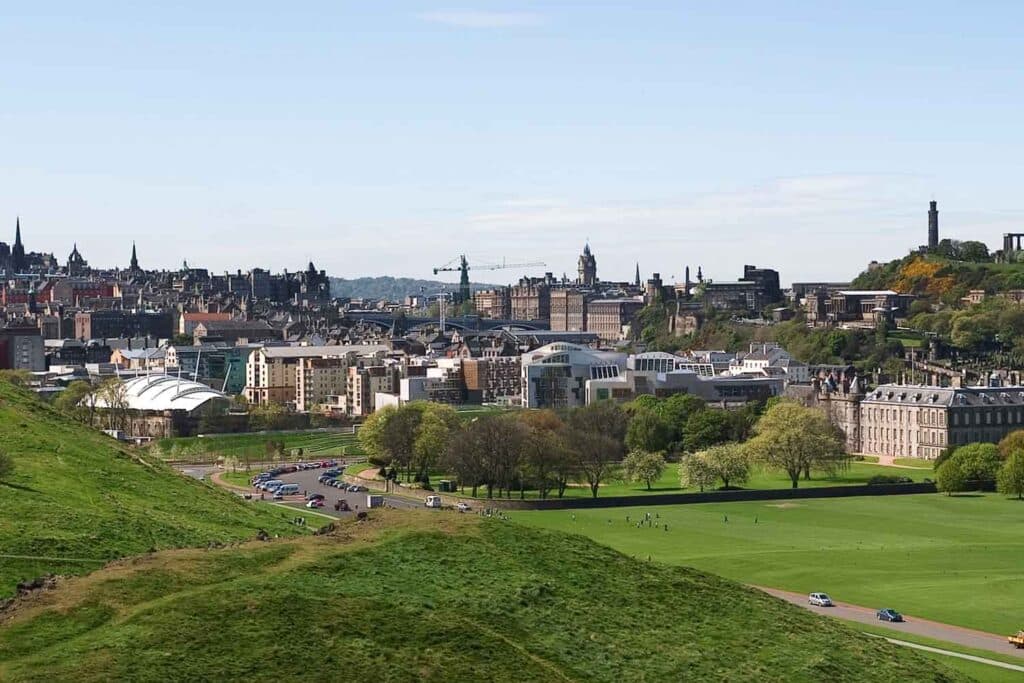
This extinct volcano dominates the landscape and marks the highest point in Holyrood Park. Standing 251 meters high, it offers a skyline panorama that’s hard to match in any other European capital.
What makes Arthur’s Seat so special isn’t just the summit view, but the feeling of being out in open nature just minutes from the city center. As you walk up, urban noise fades away, replaced by the wind, birds, and open scenery surrounding the hill.
From the peak, you can see virtually the whole city: Edinburgh Castle, the Royal Mile, Calton Hill, the New Town, the Firth of Forth, and even the surrounding hills.
It’s one of those spots that helps you make sense of Edinburgh’s geography in a way that’s impossible from street level.
Is the hike difficult?
Not particularly.
Several paths lead to the summit. Some are a bit steeper than others, but anyone with average fitness can manage the climb without much trouble.
The main trail usually takes 45 to 60 minutes going up, depending on your pace and how often you stop to take in the scenery.
You don’t need technical gear or hiking expertise, though comfortable shoes are recommended, and keep in mind that wind can be strong up there most of the year.
When is the best time to climb?
Sunrise and sunset deliver the most spectacular conditions.
During summer months, golden-hour light hits the Old Town and the castle, creating some of the most striking views in Scotland.
Even on cloudy days, Arthur’s Seat holds a special charm thanks to the ever-shifting Scottish skies.
Is it worth it?
Absolutely.
If Edinburgh Castle represents the history of the city, Arthur’s Seat represents its natural landscape.
Few experiences connect you so directly to the relationship between geography and city development.
Calton Hill: the most accessible viewpoint in the city
If Arthur’s Seat delivers the best grand panorama, Calton Hill provides what is arguably Edinburgh’s most iconic postcard view.

Located at the eastern end of Princes Street, this modest hill features several of the city’s recognizable monuments and takes just a few minutes to reach on foot from the center.
The walk up is short and easy, making it an excellent option for anyone wanting sweeping views without a strenuous climb.
From the top, you get fantastic views over the Old Town, New Town, Arthur’s Seat, and Edinburgh Castle.
Many of the most famous photos of the Scottish capital were shot right here.
The “Athens of the North”
Calton Hill is also famous for its Neoclassical monuments.
The most eye-catching is the National Monument, modeled after the Parthenon in Athens, though its construction was famously left unfinished.
This collection of monuments helped earn Edinburgh the nickname “Athens of the North” during the 19th century.
Beside it stand other landmarks like the Nelson Monument and the Dugald Stewart Monument—the latter being one of the most photographed framing points in the city.
The best sunset spot
Many locals consider Calton Hill the single best spot to watch the sunset.
Its alignment allows you to watch light shift gradually across the Old Town rooftops and the outline of the castle.
Because it’s so close to downtown, it’s effortless to swing by even if you’re tight on time.
Arthur’s Seat or Calton Hill: which to choose?
If you only have time for one, Arthur’s Seat offers a more wild, expansive experience.
However, if you want quick, easy access that fits seamlessly into any city stroll, Calton Hill is fantastic.
Ideally, do both. Each provides a totally different perspective, highlighting why Edinburgh is ranked among Europe’s most beautiful capitals.
Dean Village: the neighborhood that feels like a countryside hamlet
Less than a twenty-minute walk from Princes Street lies one of Edinburgh’s biggest surprises.
Dean Village feels like it belongs in a completely different world.
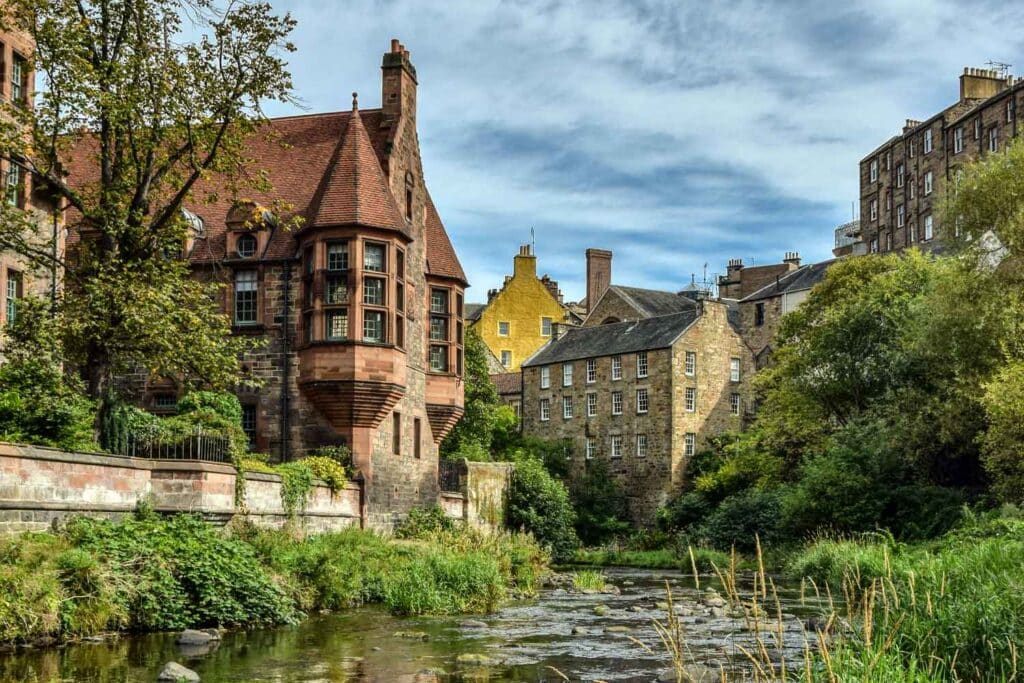
For centuries, it was an independent grain-milling village powered by the Water of Leith, the river running through this part of the city. Its name “Dean” comes from an old Scots word for a deep valley.
Today, it is one of the most picturesque, peaceful pockets of the city.
Stone cottages, historic bridges, riverside greenery, and an absence of city hustle create a totally distinct feel from the Royal Mile or Grassmarket.
It’s the ideal spot to see how quickly Edinburgh’s scenery transforms with just a short walk.
The most famous building here is Well Court, a striking 19th-century residential block that has become an iconic image of Dean Village.
While many pop in briefly for photos, it’s worth taking a bit more time to stroll along the river path.
Is it worth visiting?
Without a doubt.
Especially if you’ve already covered the major Old Town highlights and want to experience a quieter, less touristy side of Edinburgh.
Greyfriars Kirkyard: history, legends, and the Harry Potter phenomenon
Few spots weave together so much history, folklore, and popular culture as Greyfriars Kirkyard.
This historic graveyard near the Royal Mile is easily one of the most fascinating locations in town.
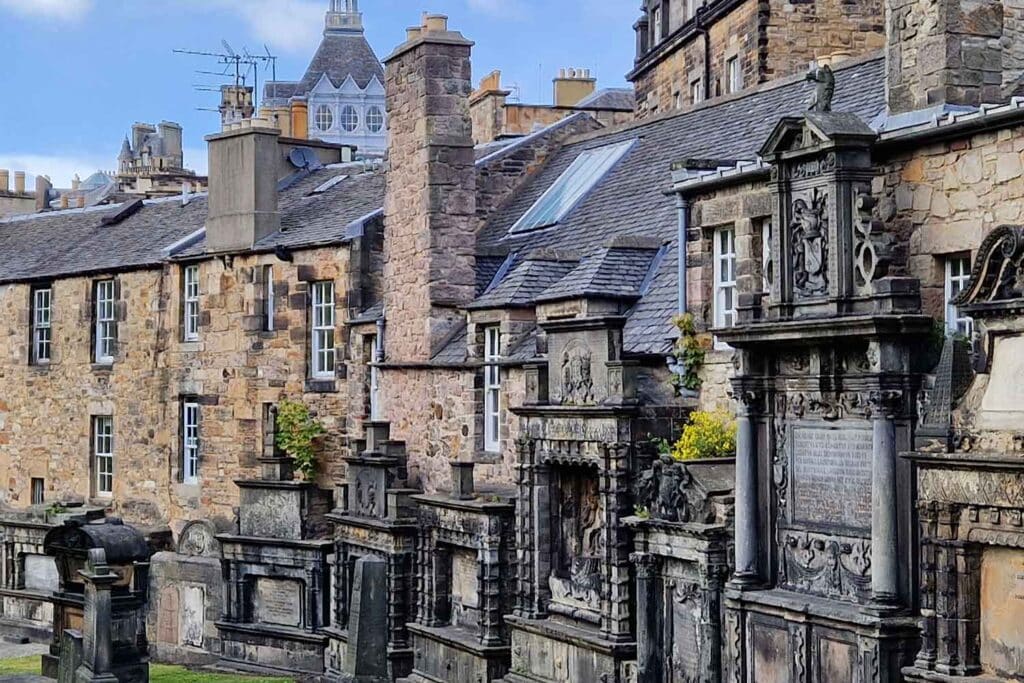
Established in the 16th century, it contains the graves of notable Scottish figures and offers deep insight into Edinburgh’s past centuries.
Yet for many visitors, its fame stems from two very different stories.
On one side is Greyfriars Bobby, the loyal Skye Terrier who famously guarded his owner’s grave for years, becoming one of Edinburgh’s most cherished legends.
On the other is its association with Harry Potter.
Several headstones feature names that closely resemble characters from the books, most famously Thomas Riddell, often linked to Lord Voldemort’s birth name.
While the exact extent of these inspirations remains a matter of fan lore, Greyfriars is a mandatory stop for Potter fans.
A place steeped in stories
Harry Potter aside, Greyfriars possesses an extraordinary atmosphere.
Leaning gravestones, ancient mausoleums, and mature trees make it one of the most evocative spaces in the city.
It’s a place to stroll slowly and let your imagination piece together the tales hidden in its stones.
Mysterious Edinburgh: ghosts, witches, and legends
If any European city feels like ghost stories are baked into daily life, it’s Edinburgh.
A blend of medieval closes, historic graveyards, old prisons, plagues, public executions, and centuries of superstition spawned countless tales and urban legends that remain part of local lore today.

Many tales originated in the Old Town, where harsh living conditions fed beliefs in hauntings, curses, and paranormal events for generations.
Famous stories center around underground vaults, haunted historic buildings, and Scotland’s 16th- and 17th-century witch trials.
Whether or not you believe in the supernatural, these tales are an inseparable piece of Edinburgh’s identity.
The city’s mood lends itself perfectly to ghost stories, especially after dark when cobbles and dark closes look even more enigmatic.
If you want to delve into this dark side, consider the Ghosts, Mysteries & Witches Free Tour—a super entertaining way to discover Edinburgh’s haunting tales.
Is it worth doing?
Yes, even if you aren’t usually into ghost tours.
Beyond supernatural fluff, these tours shed light on historical and social aspects of the city that standard sight-seeing skips over.
National Museum of Scotland: one of the city’s top free attractions
The National Museum of Scotland sometimes plays second fiddle to huge landmarks like the castle or the Royal Mile.
Yet many visitors end up ranking it among the biggest surprises of their entire trip.
Admission is free, and collections cover everything imaginable: Scottish history, archaeology, science, technology, design, nature, and world cultures.

With such vast diversity, every visitor finds something captivating, regardless of age or interests.
One famous item on display is Dolly the Sheep, the cloned mammal that became a global icon of Scottish scientific advancement.
However, the real draw remains the sheer quality and variety of exhibits across all galleries.
Don’t miss the rooftop terrace
Many people wander through the museum without realizing one of Edinburgh’s best secret viewpoints sits on the top floor.
The rooftop terrace delivers grand views across Old Town roofs and Edinburgh Castle.
Plus, it’s rarely as crowded as other famous lookout points.
How much time to allocate?
You could easily spend a full day inside.
However, for a first-time visit, one to two hours is usually enough to cover the highlight halls.
Since it’s free and right in the center, it’s super easy to plug into any day’s plan.
What to see in Edinburgh based on the number of days you have
One of the most frequent questions from first-timers is how many days are needed to do Edinburgh justice.
The answer depends on your pace, but one thing is clear: Edinburgh has far more to offer than meets the eye at first glance.
Many people arrive expecting to see it in a single day, only to wish they’d booked extra time. Beyond major monuments, the city is packed with characterful neighborhoods, lookouts, museums, parks, historic closes, and walks that deserve time.
To help organize your trip, here are our top recommendations based on trip length.
What to see in Edinburgh in 1 day
A single day allows you to see the absolute main icons, though you will need to prioritize your stops carefully.
The best strategy is focusing almost entirely on the Old Town and its central landmarks.
Recommended itinerary
- Edinburgh Castle
- Royal Mile
- St Giles’ Cathedral
- Victoria Street
- Grassmarket
- Greyfriars Kirkyard
- Calton Hill late in the afternoon
This path covers a core slice of history and delivers a wonderful initial feel for Edinburgh.
If it’s your first time, booking an Edinburgh Free Tour early on will help you optimize your time and contextualize everything you see.
It really helps maximize limited time while explaining the rich backstory of these sights.
Is one day enough?
Yes for a quick taste.
No if you want to experience Edinburgh at depth.
Most travelers agree the city warrants at least two or three days.
What to see in Edinburgh in 2 days
Two days let you enjoy the sights at a more comfortable pace while adding spots often cut on rushed trips.
Day 1
- Edinburgh Castle
- Royal Mile
- St Giles’ Cathedral
- Victoria Street
- Grassmarket
- Greyfriars Kirkyard
Day 2
- Arthur’s Seat
- Palace of Holyroodhouse
- Calton Hill
- National Museum of Scotland
- Dean Village
This layout seamlessly mixes history, cityscape views, and top viewpoints.
Two days mark the ideal baseline for walking away with a well-rounded experience of Edinburgh.
What to see in Edinburgh in 3 days
For many travelers, three days is the absolute sweet spot.
It lets you see major monuments leisurely, explore lesser-known neighborhoods, and absorb the city vibe without rushing.
Day 1
Old Town:
- Edinburgh Castle
- Royal Mile
- St Giles’ Cathedral
- Victoria Street
- Grassmarket
Day 2
Nature and viewpoints:
- Arthur’s Seat
- Palace of Holyroodhouse
- Calton Hill
- National Museum of Scotland
Day 3
Charming neighborhoods and hidden corners:
- Dean Village
- Stockbridge
- Water of Leith
- Circus Lane
- Leith
This plan uncovers picturesque parts of town that weekenders usually miss out on.
What to see in Edinburgh in 4 days or more
With four or more days, your travel experience shifts entirely.
You stop checking off landmark checklists and start living the city rhythm, venturing into non-touristy pockets.
It’s the ideal moment to explore:
- Craigmillar Castle
- Duddingston Village
- Blackford Hill
- Leith in detail
- Water of Leith Walkway trails
- Lesser-known museums
- Historic gardens and parks
Having four-plus days also opens up opportunities to discover iconic Scottish country sights beyond Edinburgh.
Many visitors base themselves in Edinburgh while taking day trips out to famous landscapes, mountains, castles, lochs, Stirling, or St Andrews.
Further down in this guide, you’ll find a section dedicated to combining your Edinburgh stay with day trips into other regions of Scotland.
Our recommendation
If you have flexibility, try to spend at least three full days dedicated to Edinburgh itself.
It hits the perfect balance between available travel time and the volume of highlights on offer.
Fewer days force heavy compromises. More days reveal an authentic, relaxed side of one of Europe’s top capitals.
Lesser-known spots that are worth a visit
Most tourists stick to the castle area, the Royal Mile, and major Old Town sites. Yet one of Edinburgh’s finest traits is how generously it rewards those who wander off the beaten track.
Minutes away from crowds are serene neighborhoods, river paths, ancient villages swallowed by city growth, and unmatched panoramic hills.
If you’re staying three days or more, set aside time to uncover these gems.
Stockbridge: one of Edinburgh’s most characterful neighborhoods
Stockbridge is the kind of place many travelers stumble into by chance and end up remembering as a highlight of their trip.
Located north of the New Town, it combines grand Georgian buildings, independent boutiques, cozy cafes, and a vibe much quieter than the historic city center.
Unlike the Old Town, the goal here is simply taking an aimless stroll to soak up everyday local living.
The streets are peaceful, atmosphere is lovely, and you get a glimpse into how local residents actually experience Edinburgh.
Is it worth visiting?
Yes, especially if you’ve seen the major monuments and crave a more genuine slice of Scottish city life.
Circus Lane: arguably the prettier street in Edinburgh
It’s likely that no single street in Edinburgh appears on Instagram quite as often as Circus Lane.
This tiny residential lane in Stockbridge has become a photo favorite thanks to stone mews houses, climbing ivy, and quiet charm.
Interestingly, it isn’t a major historical attraction in the traditional sense.
There are no grand museums, monuments, or major historic landmarks on it.
It is simply an extraordinarily pretty street.
That simple charm has turned it into a fixture for photographers and fans of picturesque urban architecture.
Practical tip
Visit early in the morning to enjoy it quietly and take better photos without crowds.
Water of Leith Walkway: a different kind of stroll through Edinburgh
Most people connect Edinburgh with towering castles, monuments, and historic alleys.
Fewer realize a peaceful nature trail winds right through the city along the river Water of Leith.
This path connects various interesting districts, offering a totally unique perspective on the Scottish capital.
Along the way, you’ll cross historic bridges, pass through wooded spots, see repurposed mills, and encounter areas that make you forget you’re inside a major city.
The sections passing through Dean Village and Stockbridge are particularly charming.
Do you need to walk the whole thing?
No.
It’s best to use short stretches of the path to walk between different neighborhoods while enjoying scenic surroundings.
Craigmillar Castle: the great forgotten castle
When discussing Edinburgh castles, almost all attention goes to the famous fortress atop Castle Rock.
Yet there is another castle many travelers overlook that deserves far more attention.
Craigmillar Castle sits a few miles from the city center and retains a much quieter, authentic atmosphere than Edinburgh Castle.
Its ruined walls, towers, and courtyards make it remarkably easy to imagine medieval life inside a Scottish fortress.
Furthermore, it has close ties to Mary, Queen of Scots, who spent time recovering within its walls.
Is it worth making the trip out?
Yes, especially if you love medieval history or prefer uncrowded historical sites.
Duddingston Village: a country village tucked inside the city
At the base of Arthur’s Seat lies Duddingston, one of Edinburgh’s most surprising pockets.
Although technically inside the city, it retains the look and feel of a traditional Scottish village.
Stone cottages, quiet lanes, and proximity to Duddingston Loch create an ambiance entirely removed from downtown.
It’s a wonderful stop to rest after visiting Holyrood Park or walking up Arthur’s Seat.
Many visitors pass right nearby without ever realizing it’s there.
Blackford Hill: a lesser-known panoramic viewpoint
Arthur’s Seat and Calton Hill steal the spotlight when lookouts are mentioned.
Yet Blackford Hill offers one of the best panoramic vistas of Edinburgh and stays relatively undiscovered by tourists.
From the top, you get a incredible view of the skyline—with the castle, Arthur’s Seat, and New Town lining up clearly on bright days.
In addition, you’ll encounter far fewer crowds compared to other hills.
Who is it recommended for?
For those who have already hit famous lookouts and want a fresh perspective on the city skyline.
Leith: the waterfront district that transformed the most
For decades, Leith was mostly known as Edinburgh’s working port district.
Today, it stands as one of the most vibrant and exciting neighborhoods in the city.
Recent regeneration turned this waterfront zone into an increasingly trendy hub for locals and travelers alike.
Exploring Leith showcases an Edinburgh that contrasts sharply with standard postcard imagery.
Canals, converted industrial warehouses, historic quaysides, and modern food scenes thrive here.
It is also home to major sights outside the city center, such as the Royal Yacht Britannia.
Is it worth including in your trip?
If you have three days or more, absolutely.
Leith proves Edinburgh goes far beyond the Old Town and castle, offering a modern edge visitors don’t always expect.
Free things to see in Edinburgh
One major upside of traveling to Edinburgh is that many of its finest highlights cost absolutely nothing.
Unlike capitals where every key sight charges an entry fee, Edinburgh lets you take in iconic locations simply by walking around.
In fact, several of the top highlights in this guide are 100% free to enjoy.
Arthur’s Seat
The absolute best grand view over Edinburgh requires no ticket.
Climbing Arthur’s Seat provides one of the most memorable experiences in Scotland without spending a penny.
Few world cities let you scale an ancient volcano to look down on a whole medieval center for free.
Calton Hill
Calton Hill is another top attraction accessible completely free of charge.
Its central location and gentle slope make it one of the easiest free activities in town.
Plus, you get postcard-worthy photos over the skyline.
Dean Village
Wandering through picturesque Dean Village costs nothing and unlocks a lovely side of the capital.
The blend of historic architecture, riverside trees, and quiet setting makes it a crowd favorite.
Greyfriars Kirkyard
Greyfriars Kirkyard is open to explore freely and offers a fascinating dive into local history and lore.
Its centuries-old stones, legends, and Harry Potter connections make it a must-visit free stop.
National Museum of Scotland
Despite world-class collection quality, entry to the National Museum of Scotland is free.
It easily fills several engaging hours and regularly ranks among top-rated city activities.
Victoria Street and Grassmarket
Walking along Scotland’s most famous historic streets is entirely free.
Victoria Street, Grassmarket, and The Vennel provide fantastic photo spots that belong on every itinerary.
Our recommendation
Even on a tight budget, you can have a world-class experience in Edinburgh.
Combining key lookouts, Old Town streets, Dean Village, and the National Museum lets you absorb the city’s essence without spending money on entry tickets.
The best viewpoints in Edinburgh
Edinburgh’s volcanic terrain plays a huge role in why it looks so dramatic.
Volcanic hills across the city provide breathtaking vantage points from multiple angles.
If you love photography or scenic vistas, these are the lookouts you shouldn’t miss.
Arthur’s Seat
The most complete panoramic view in the city.
From its peak, you take in the castle, Royal Mile, New Town, Firth of Forth, and surrounding countryside.
It remains the grandest view in Edinburgh.
Calton Hill
The most accessible viewpoint.
It yields stunning angles over the Old Town skyline without requiring a hard climb.
At sunset, it creates some of the finest photo opportunities in the capital.
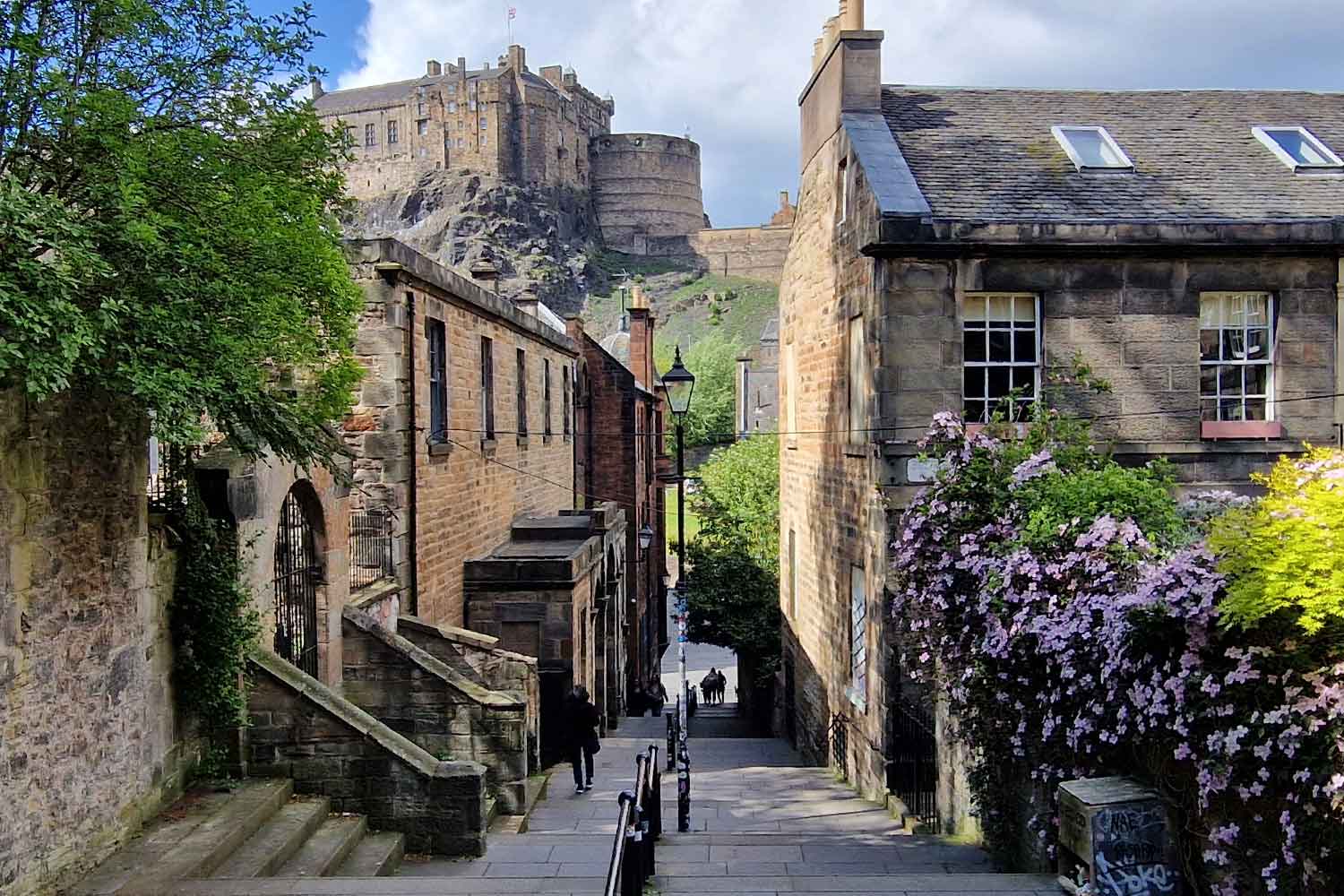
The Vennel
Home to arguably the most famous framed shot of Edinburgh Castle.
While technically a alley stairway rather than a hill, The Vennel steps frame the fortress perfectly.
It’s an essential quick stop for photo enthusiasts.
National Museum of Scotland Terrace
One of the Old Town’s best-kept secrets.
The museum’s rooftop terrace offers brilliant views across Old Town roofs to the castle without any thick crowds.
Many visitors walk right past without knowing it’s there.
Blackford Hill
The quiet, lesser-known alternative.
It offers sweeping vistas over the entire city and sees a fraction of the visitors that hit Arthur’s Seat or Calton Hill.
Which one to pick?
If you only have time for one, Arthur’s Seat is still the top overall choice.
If you want quick convenience, pick Calton Hill.
If you want that iconic framed castle shot, hit The Vennel.
And if you want to dodge crowds entirely, Blackford Hill will be a pleasant surprise.
Mistakes many tourists make in Edinburgh
Edinburgh is relatively compact and easy to walk around, but common tourist mistakes can hinder an otherwise great trip.
Knowing these upfront will help you maximize your time and enjoy the city to the fullest.
Trying to see everything in a single day
This is easily the most common mistake.
Many arrive thinking Edinburgh can be knocked out in a few hours due to its small footprint. Yet the city offers far more depth than it seems on the surface.
Between castles, viewpoints, museums, historical quarters, and hidden corners, it easily fills several days.
If possible, try to dedicate at least two to three full days.
Sticking strictly to the Royal Mile
The Royal Mile is essential, but it isn’t the entire city.
Travelers who never step outside the Old Town miss out on gems like Dean Village, Stockbridge, Calton Hill, and Arthur’s Seat.
A huge part of Edinburgh’s charm lies in noticing how drastically atmosphere shifts from neighborhood to neighborhood.
Skipping Arthur’s Seat
Some travelers skip the walk thinking it’s too strenuous.
In reality, the trail is manageable for most people, and the rewards far outweigh the effort.
For many visitors, it ends up being a standout memory of their trip.
Not dressing appropriately for the weather
Scottish weather can cycle through four seasons in a single afternoon.
Even in summer, carrying a light waterproof jacket and a warm layer is wise.
Winds can also get quite whipping on high lookouts like Arthur’s Seat or Calton Hill.
Only visiting famous headline attractions
The castle and Royal Mile are mandatory, but many of the pleasantest spots sit outside main tourist routes.
Dean Village, Circus Lane, Duddingston, and the Water of Leith are classic examples.
Not booking popular activities ahead of time
During peak travel seasons, high-demand sights sell out early.
If you definitely want to go inside the castle or join a specific guided tour, book in advance.
Our advice
Make time to walk around aimlessly.
Edinburgh shines brightest when explored on foot. Often, the best discoveries happen when you step off the main track and explore side alleys you didn’t plan to visit.
Things to see in Edinburgh on a rainy day
When planning a trip to Scotland, accept one reality early on: sooner or later, you’re going to encounter rain.
The good news is Edinburgh is completely built for it.
In fact, many travelers find that top city attractions are actually ideal rainy-day activities. Furthermore, Scottish weather changes fast, often shifting from morning rain to clear afternoon skies.
Our tip is simple: don’t scrap your whole day over a few hours of rain. Visit indoor sights when showers hit, saving outdoor hills and walks for when skies clear up.
National Museum of Scotland
If we had to name one single indoor pick for a rainy morning in Edinburgh, it’d be the National Museum of Scotland.
Admission is free, and its galleries span Scottish history, science, technology, nature, and world cultures. It stands as one of the UK’s finest museums and a top shelter for a couple of rainy hours.
Plus, as clouds break, you can pop up to the rooftop terrace for a great view over Old Town.
Palace of Holyroodhouse
While many prioritize Edinburgh Castle, Holyroodhouse often proves a much more comfortable indoor option on heavily rainy days.
Most of the tour takes place inside, guiding you through State Apartments, historic rooms, and Mary, Queen of Scots’ chambers. Local guides frequently rank it among the best bad-weather visits in town.
St Giles’ Cathedral
Right on the Royal Mile, St Giles’ Cathedral is a perfect spot to duck inside during a sudden downpour.
You can explore its interior quickly, gaining insight into a key pillar of Scottish religious history. Situated in the heart of the Old Town, it seamlessly slots into any walking route.
Explore the closes on the Royal Mile
Light rain doesn’t have to halt outdoor exploring entirely.
Many famous Royal Mile closes, hidden courtyards, traditional shops, and small museums let you continue discovering the Old Town even when skies turn gray.
In fact, some travelers feel moody skies and wet cobblestones make Edinburgh look even more atmospheric and authentic.
Camera Obscura
Located near the castle, Camera Obscura is a hugely popular family-friendly attraction.
Five floors of optical illusions, interactive exhibits, and visual tricks easily keep everyone entertained indoors for hours. When weather improves, the rooftop terrace yields fantastic central views.
Dynamic Earth
At the foot of Arthur’s Seat lies Dynamic Earth, a top interactive science center in Edinburgh.
Through immersive exhibits, simulations, film projections, and a planetarium, it takes you on a journey through Earth’s history from creation to today. It’s fantastic for families, though adults enjoy it just as much.
Free art galleries and museums
One of Edinburgh’s big perks is its collection of free cultural venues.
The National Galleries of Scotland display masterworks by Rembrandt, Velázquez, Vermeer, and major Scottish painters, while smaller specialized museums share unique angles on local history.
What if it rains all day?
First of all, don’t worry about it.
Rain is part of the authentic Scottish travel experience and rarely ruins a trip. In fact, some of Edinburgh’s most picturesque light moments happen right after a rain shower, when sun breaks through clouds over the castle, Royal Mile, or Arthur’s Seat.
Pack a light raincoat and sensible shoes, and you’ll quickly discover what locals know well: it rarely rains hard enough in Edinburgh to stop you from exploring.
Frequently asked questions about visiting Edinburgh
How many days do I need to visit Edinburgh?
Two days cover the main tourist highlights in the city.
However, three days hit the sweet spot to enjoy Edinburgh without rushing and explore off-the-beaten-path corners too.
When is the best time to visit Edinburgh?
Spring and early autumn offer a sweet spot of pleasant weather, good daylight hours, and manageable visitor numbers.
May, June, and September are widely considered great months for city sightseeing.
Is it worth going inside Edinburgh Castle?
Yes.
For a first-time trip, it stands as one of the most recommended experiences, helping frame broad Scottish history.
Plus, rampart views over the city are outstanding.
Can you walk everywhere in Edinburgh?
Absolutely.
Most of the sights listed in this guide are easy to reach on foot.
While there are steep hills, the city is very walker-friendly for travelers who enjoy exploring on foot.
What is the best viewpoint in Edinburgh?
Arthur’s Seat delivers the grandest 360 view.
However, Calton Hill is easier to reach, and The Vennel gives that iconic framed castle shot.
It all comes down to the kind of view you’re after.
What to do in Edinburgh when it rains?
Rain is a standard part of traveling in Scotland and shouldn’t ruin plans.
Top options for damp days include:
- Edinburgh Castle.
- National Museum of Scotland.
- St Giles’ Cathedral.
- Palace of Holyroodhouse.
- Exploring historic Royal Mile closes.
Plus, moody shifts in weather often make the city look even more atmospheric in photos.
Is a weekend enough time to see Edinburgh?
Yes.
A weekend allows you to hit the headline attractions in town.
However, spending three or four days will make for a far richer, well-paced experience.
What is the one absolute must-see spot?
If you could pick only one, choose Edinburgh Castle.
If you can pick two, add Arthur’s Seat.
Together, they capture the history and landscape that define the Scottish capital.
If you have extra time: essential day trips from Edinburgh
While Edinburgh could easily keep you entertained for days on end, many travelers use the capital as a base to discover other iconic parts of Scotland.
The city’s location is ideal for taking single-day excursions out to world-famous scenery, including mountains, castles, lochs, and historic villages.
Popular day trip destinations include:
- The Scottish Highlands.
- Glen Coe.
- Loch Ness.
- St Andrews.
- Stirling.
- The Kelpies.
- Loch Lomond.
- The Isle of Skye.
Each region highlights a different side of Scotland, complementing your city stay in Edinburgh with dramatic natural landscapes.
If you have extra days, check out available tour options on Excursions from Edinburgh, featuring routes to Scotland’s most stunning locations.
Our 5 favorite spots in Edinburgh
After years of guiding thousands of travelers around the city, these are the five places we recommend most to first-time visitors.
1. Edinburgh Castle
Because it explains the story of the city and of Scotland better than anywhere else.
2. Arthur’s Seat
Because it blends nature, geology, scenery, and history into a truly unique experience.
Few European capitals boast anything quite like it.
3. Dean Village
Because it shows that Edinburgh is so much more than just grand monuments and castles.
It’s the kind of hidden spot that amazes even people who know the city well.
4. Calton Hill
Because it packs top skyline views into an accessible walk that fits any itinerary easily.
5. Victoria Street
Because it perfectly captures the image people hold of Edinburgh before they even arrive.
Its architecture, atmosphere, and history make it one of the most special streets in the city.
Conclusion
Edinburgh manages to pull off something remarkable: captivating first-time visitors and repeat travelers alike.
Its mix of history, architecture, dramatic volcanic topography, character-filled quarters, and rich culture makes it one of Europe’s most thrilling urban destinations.
Edinburgh Castle, the Royal Mile, Arthur’s Seat, and Dean Village anchor every guide. Yet the real magic of the Scottish capital comes from wandering unhurriedly—finding a hidden close, catching a new angle of the castle, or watching sunset light shift over the skyline from a peak.
We hope this guide helps you plan your trip and experience the very best of Edinburgh.
And if you have extra days to explore Scotland, remember the capital serves as an ideal launchpad for trip itineraries out to the Highlands, Skye, Loch Ness, and beyond.









Previous comments...